The English Longhorn: Discover Derbyshire's Historic Native Cattle Breed
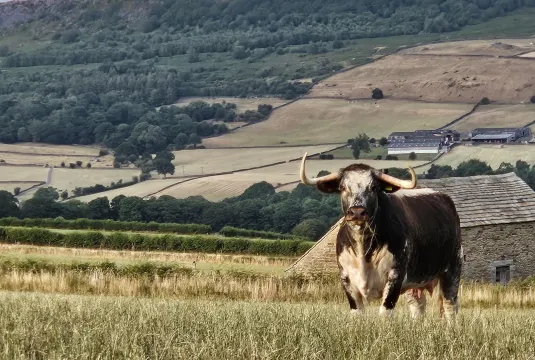
When exploring Derbyshire's beautiful countryside, you may spot a striking breed of cattle with magnificent curved horns grazing peacefully in lush green pastures.
A Breed Born from Agricultural Innovation
Despite their name, English Longhorns are not related to the American or Texas Longhorn. Instead, they have a uniquely British story that helped shape modern farming.
Their history is closely linked to Robert Bakewell (1725–1795), the pioneering agriculturalist from Dishley in neighbouring Leicestershire. Often described as the father of selective livestock breeding, Bakewell transformed farming by carefully selecting animals for their best characteristics, rather than leaving breeding to chance.
Using native horned cattle from the Midlands and northern England, crossed with a Westmorland bull, Bakewell developed the Dishley Longhorn – the breed we now know as the English Longhorn. His revolutionary breeding methods produced cattle that matured more quickly, yielded high-quality beef and helped feed Britain's rapidly growing industrial towns during the 18th century.
Derbyshire's Farming Heritage
The English Longhorn became a familiar sight across the fields of Derbyshire, where rich pastureland provided ideal grazing. The breed fitted perfectly into the county's traditional mixed farming systems, with cattle raised alongside sheep and crops on family farms that have shaped Derbyshire's landscape for centuries.
Before agricultural improvements, cattle were valued as much for their strength as for their meat and milk. They pulled ploughs, produced rich milk for butter and cheese, and even provided horns that were crafted into everyday household items, including buttons, knife handles, drinking cups and lamps. Thin slices of horn were sometimes even used as window panes before glass became affordable.
As farming modernised during the 20th century, traditional breeds such as the English Longhorn fell out of favour. Faster-growing continental breeds became more popular and, by the 1960s, the English Longhorn was close to extinction.
Thankfully, dedicated breeders and the Rare Breeds Survival Trust worked to preserve this important part of Britain's agricultural history. Today, the breed has made an impressive comeback and is once again thriving on farms across the country, including here in Derbyshire.
Built for the British Countryside
English Longhorns are instantly recognisable by their elegant horns, which sweep gracefully downwards towards the nose. Their coats range from rich reds and browns to silver-grey brindles, all featuring the distinctive white stripe along the spine and tail known as "finching".
Their calm temperament, easy calving and excellent maternal instincts have made them favourites with farmers for generations. They are also perfectly suited to grazing species-rich grasslands, helping to maintain the traditional meadows and landscapes that make Derbyshire so special.
A Taste of Derbyshire
Today, English Longhorn beef is increasingly sought after by chefs, farm shops and independent butchers. Naturally reared on grass, the beef is celebrated for its exceptional marbling, rich flavour and tender texture, making it a true taste of the Derbyshire countryside.
Whether you encounter English Longhorns while walking in the Peak District, visiting one of Derbyshire's many farms, or enjoying locally produced beef in one of the county's excellent pubs or restaurants, you're experiencing a living connection to centuries of farming tradition. These magnificent cattle are more than simply a beautiful sight – they are an enduring symbol of the innovation, resilience and rural heritage that continue to define Derbyshire today.